
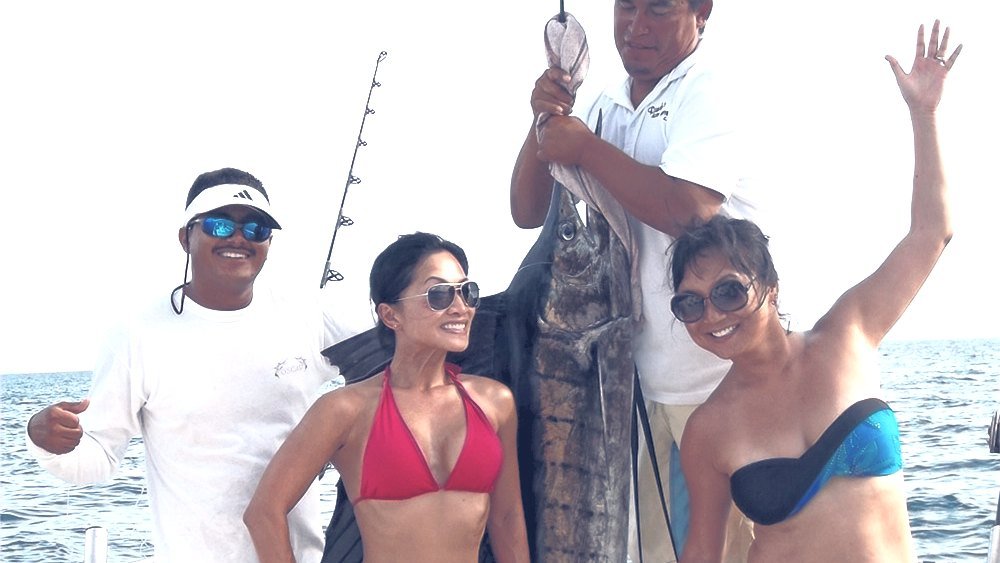
Fishing Charter Puerto Vallarta: the one activity we recommend to every visitor
What we tell the architects, hoteliers and investors who fly in for a shoot and ask what to do with their free day on the bay.
We spend a good part of the year photographing villas, hotels and developments in Puerto Vallarta and Riviera Nayarit, and almost every client who flies in for a production asks the same thing when we wrap: "I have a free day — what should I do?" The answer we have given for years has nothing to do with cameras: go fishing for a day. On a private boat, with a captain who knows the bay, early. It is the activity that best explains why this coast is worth the trip, and the one people mention again months later.
Puerto Vallarta sits on Banderas Bay, one of the largest and deepest bays on the Pacific coast of the Americas. A few miles from the marina there are underwater mountains — El Banco and La Corbeteña — where currents push baitfish to the surface and yellowfin tuna, marlin, sailfish, dorado and roosterfish follow. A Fishing Charter Puerto Vallarta trip is the most direct way to meet them, and you do not need to know how to fish to enjoy it.
This guide is for visitors, not tournament anglers: what a private fishing day looks like, which trip suits your group, what is biting in which month, what it costs, what should be included, who to go with and — because we cannot help ourselves — how to photograph the day so the pictures look like the memory.
Why a fishing charter deserves a day of your Puerto Vallarta visit
Most people know the bay from the shore. That is a shame, because what makes the beaches beautiful — the Sierra Madre dropping into the sea, deep water close to land — is exactly what makes this one of the best fishing destinations in the world. You do not have to sail for hours to reach good water: productive fishing starts inside the bay itself.
Then there is the simple pleasure of it. Leaving the marina at first light with the mountains turning gold behind you, dolphins crossing the bow, a rod in your hands and, by mid-morning, ceviche made on board from what you just landed. Unlike many "tours", a private charter is genuinely yours: your group, your pace, and a captain deciding where the fish are that day rather than a fixed itinerary with loud music.
What a private charter looks like, step by step
A private charter means the whole boat is reserved for your group: no strangers, no one else's schedule. This is how a typical day runs with an experienced operator such as Fishing Rebels, a locally run team based at Marina Los Peines that has built its reputation on honest fishing reports and on putting people on fish.
Departure
You agree on a departure point near where you are staying: Marina Vallarta and Marina Los Peines in Puerto Vallarta, the Los Muertos Pier in the Romantic Zone, Nuevo Vallarta and Paradise Village in Riviera Nayarit, or the Marina Riviera Nayarit in La Cruz de Huanacaxtle. Most boats leave between 6:30 and 8:00 AM, when the sea is flattest.
Bait, gear and licences: already handled
Serious operators include everything: a Mexican fishing licence for every person on board (it is mandatory), tournament-grade rods and reels, live bait prepared before departure, bottled water and ice. You show up with sunscreen, a hat and a good attitude.
The fishing
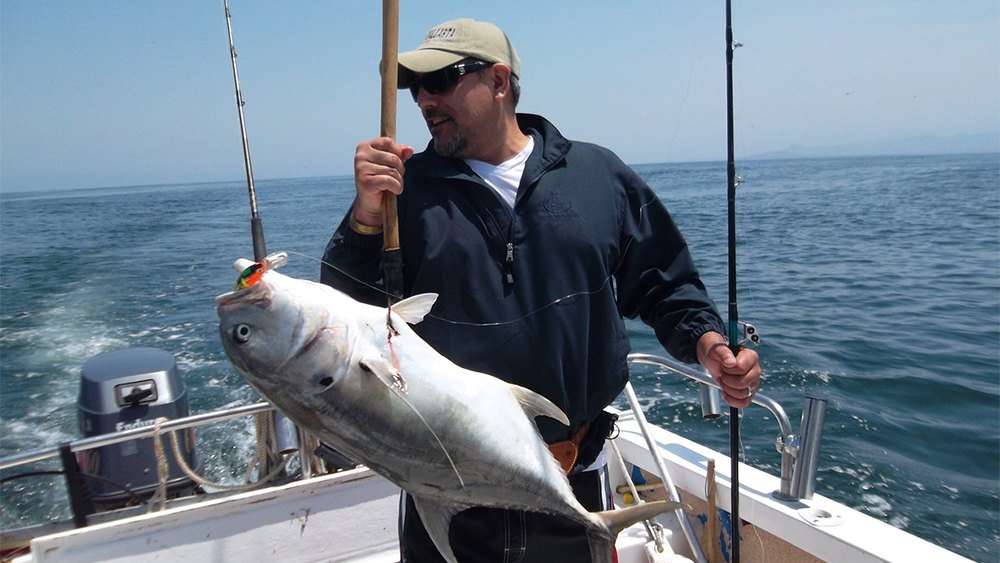
On a 4-hour inshore trip the captain works the rocky points, the south shore and the structure inside the bay: roosterfish, jack crevalle, snapper and, in season, dorado and small tuna. With 6 hours you can reach the Marietas Islands or El Morro. Full-day trips of 8 to 14 hours run to La Corbeteña and El Banco for yellowfin tuna, blue and black marlin and sailfish. The crew reads the conditions and the week's reports to decide where the bite is on.
Ceviche and the ride home
This is the part nobody expects the first time: the crew cleans the catch on board and turns part of it into fresh ceviche before you are back at the dock. The rest is filleted and bagged; many hotels and villa cooks will happily prepare it for dinner.
Inshore or offshore: which trip to choose
- Inshore, 4 to 6 hours — families and first-timers. Always within sight of land, calmer water, constant action on light tackle and back in time for lunch. Roosterfish, jacks and snapper.
- Offshore, 8 to 10 hours — tuna and billfish. Reaching La Corbeteña or El Banco takes a couple of hours each way, but that is where Puerto Vallarta's reputation comes from: yellowfin tuna here can exceed 200 pounds, and marlin and sailfish are a real possibility in season.
- Extended and multi-day trips — for the serious. Some operators run departures of up to 14 hours and multi-day expeditions on larger vessels.
If it is your first time and you have children, take the inshore trip. If you have fished before and came to Mexico for a big tuna, go offshore with a crew that runs those banks every week: deep sea fishing in Puerto Vallarta rewards local knowledge more than any piece of gear.
Best time of year to fish in Puerto Vallarta
- October to March: the big window. Yellowfin tuna stack up on the outer banks and marlin are most consistent in late autumn. It overlaps with high season, so book ahead.
- December to March: humpback whales are in the bay; many charters end up whale-watching on the way out or back.
- May to October: warm water brings dorado, sailfish and wahoo closer to shore, and roosterfish fishing along the beaches is at its best.
- Inshore, all year: roosterfish, jacks, snapper and bonito are always inside the bay.
A good operator publishes a fishing report regularly. Read it before choosing your trip length: it tells you what is being caught this week, not what the brochure promises.
What it costs and what should be included
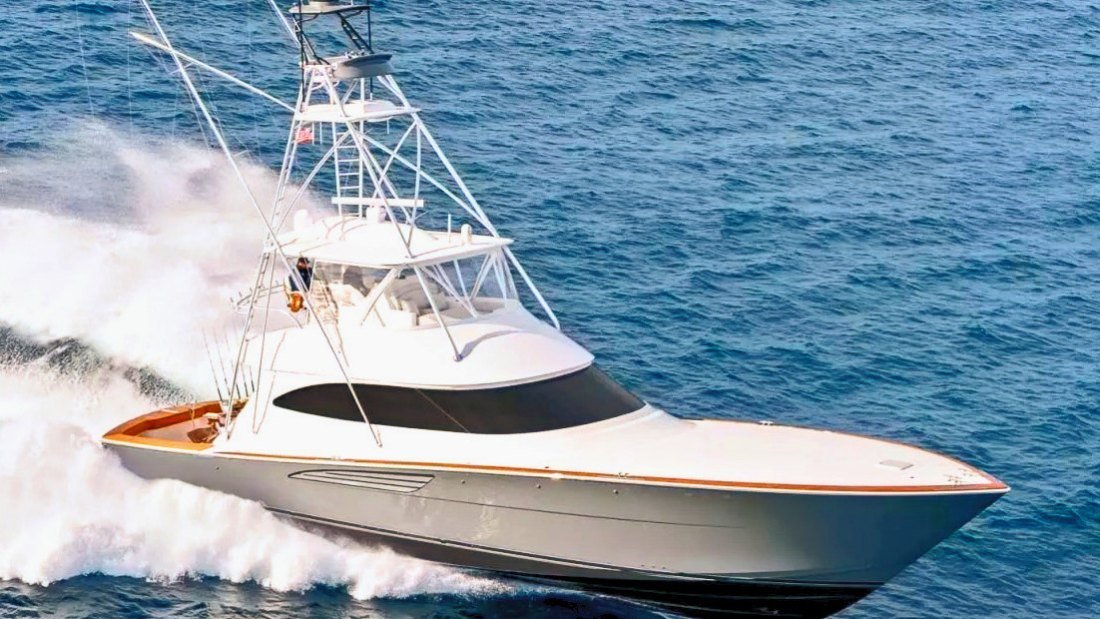
The price depends on the size of the boat and the hours. As a reference, at the time of writing Fishing Rebels lists private charters starting at $275 USD for one person on a 4-hour trip, with larger boats and full days priced accordingly. Before paying a deposit, check that these are included: licences for everyone on board, live bait and tackle (not "available for an extra charge"), water and ice, cleaning and filleting of the catch, a private boat — not a shared departure — and clear marina fees. Tipping the crew (10 to 20%) is customary and appreciated.
Who to go with
There are a great many boats in Puerto Vallarta; the difference between a great day and a long one is almost always the crew. Look for an operator who has fished these particular waters for years, who answers on WhatsApp in English and Spanish, who publishes honest reports — slow weeks included — and whose reviews talk about the fishing and not just the boat.
We send our clients to Fishing Rebels for exactly those reasons: based at Marina Los Peines, access to a catalogue of more than 50 vessels — from 30-foot super pangas built in Vallarta to 55-foot air-conditioned sportfishers — and a motto that says it all: "we catch fish or we don't go home". WhatsApp +52 322 188 2266 · catching@fishingrebels.com.
How to photograph your fishing day (notes from the trade)
Here we do talk shop. Fishing photos usually disappoint for three reasons: harsh midday light, a tilted horizon and a fish held so that it looks small. The fixes:
- The best pictures are from the departure. The first hour, with the sun low and the mountains side-lit, is the same light we chase on an architecture shoot: warm, directional, with volume. Shoot the boat, the dock and the crew then.
- At midday, shade and backlight. With the sun overhead, put the person under the canopy or with their back to the sun and let the phone compensate; a blown-out face cannot be rescued.
- Fish toward the camera, at chest height. Arms extended, fish slightly forward, photographer crouched a little lower than the angler. It is the same perspective principle we use to make a lobby feel larger: whatever is closest to the lens grows.
- Level horizon. Turn on the phone's grid. On a moving boat the horizon tilts in every frame, and a sea photo with a crooked horizon looks amateur no matter how big the fish is.
- One wide shot for every portrait. The small boat against the big mountains, the wake, the birds over the bait. Those are the pictures that say where you were.
- Drone: not from the boat. Launching and landing a drone from a moving deck is the fastest way to lose it, and parts of the coast are restricted. If you want the aerial view of the marina or the bay, it is done from land with a permit; we explain how in our guide to aerial drone photography.
Fitting the fishing into your week in Vallarta
- Day 1 — Arrival. Sunset on the malecón, dinner in the Romantic Zone.
- Day 2 — Fishing charter. Early departure, 4 to 8 hours on the water, ceviche on board, fillets for dinner.
- Day 3 — Rest or shoot day. If you came for a project, this is production day: the body has recovered from the sun.
- Day 4 — Mountains or villages. A day in the Sierra Madre, or Sayulita and San Pancho to the north, or Yelapa by boat to the south.
- Day 5 — Downtown and food. Tacos, the Cuale river island, the Guadalupe parish church.
And if your visit to Puerto Vallarta is also for work — a villa to launch, a hotel refreshing its gallery, a development in pre-sale — this is our photography and video agency in Puerto Vallarta. We schedule the shoot on the day you are not at sea.
Photographs in this article: courtesy of Fishing Rebels, taken on their charters in Banderas Bay.
Frequently asked questions about fishing charters in Puerto Vallarta
Do I need fishing experience to book a charter in Puerto Vallarta?
No. Private charters adapt to the group's level: the crew rigs the lines, sets the bait and coaches you through every fish. Most first-timers land something within the first hour of an inshore trip.
Do I need a fishing licence in Mexico?
Yes, everyone who fishes needs one, but a serious operator such as Fishing Rebels includes licences for everyone on board; there is nothing for you to arrange.
How long should a first trip be?
Four to six hours inshore is ideal for families and first-timers. Book eight hours or more only if your goal is tuna or billfish on the offshore banks.
What is the best month for fishing in Puerto Vallarta?
October through March for yellowfin tuna and marlin on the outer banks; May through October for dorado, sailfish and roosterfish close to shore. Inshore fishing is good all year.
How much does a fishing charter cost in Puerto Vallarta?
It depends on the boat and the hours. As a reference, Fishing Rebels lists private charters from $275 USD for one person on a 4-hour trip; bigger boats and full days cost more. Check that licences, bait, gear, ice and filleting are included.
Can I fly a drone from the boat to photograph the fishing?
We do not recommend it: launching and landing on a moving deck is the easiest way to lose the equipment, and parts of the coast are restricted. Aerial shots of the marina or the bay are made from land, with the permits AFAC requires.
If your visit to Vallarta is also for work
Hotel Photographer
Rooms, amenities and dining that hold up your rate on Booking, Expedia and paid campaigns.
🔑Airbnb Photographer
The first photograph decides the click. Images ready for Airbnb, Booking.com and VRBO.
🚁Drone Photographer
The site, the amenities and the setting: what no ground-level frame can show.
All in a single visit🎬Drone + Video Package
Photography, aerial footage and a promotional video in one fixed package, resolved in a single visit.

Xavier Manuel
Architecture, hospitality and interior photographer. He runs Foto de Arquitectura out of Puerto Vallarta and Guadalajara, with productions across Riviera Nayarit, Tepic and the Bajío region.
More from the blog
 Interior photography: the complete guideHow an interior design project is photographed so it reads in a portfolio and in press exactly as it feels in person: light, styling, framing and what it costs.Read the article →
 Drone photography: a guide and regulations in MexicoWhen aerial photography is worth it, what Mexico's AFAC requires to fly a drone, and what it costs to add aerial coverage to your shoot.Read the article →
 Real estate and architecture video: when it's worth itWhen video actually improves conversion on a listing or portfolio, which formats exist — walkthrough, reel, drone — and what it costs to add.Read the article →