
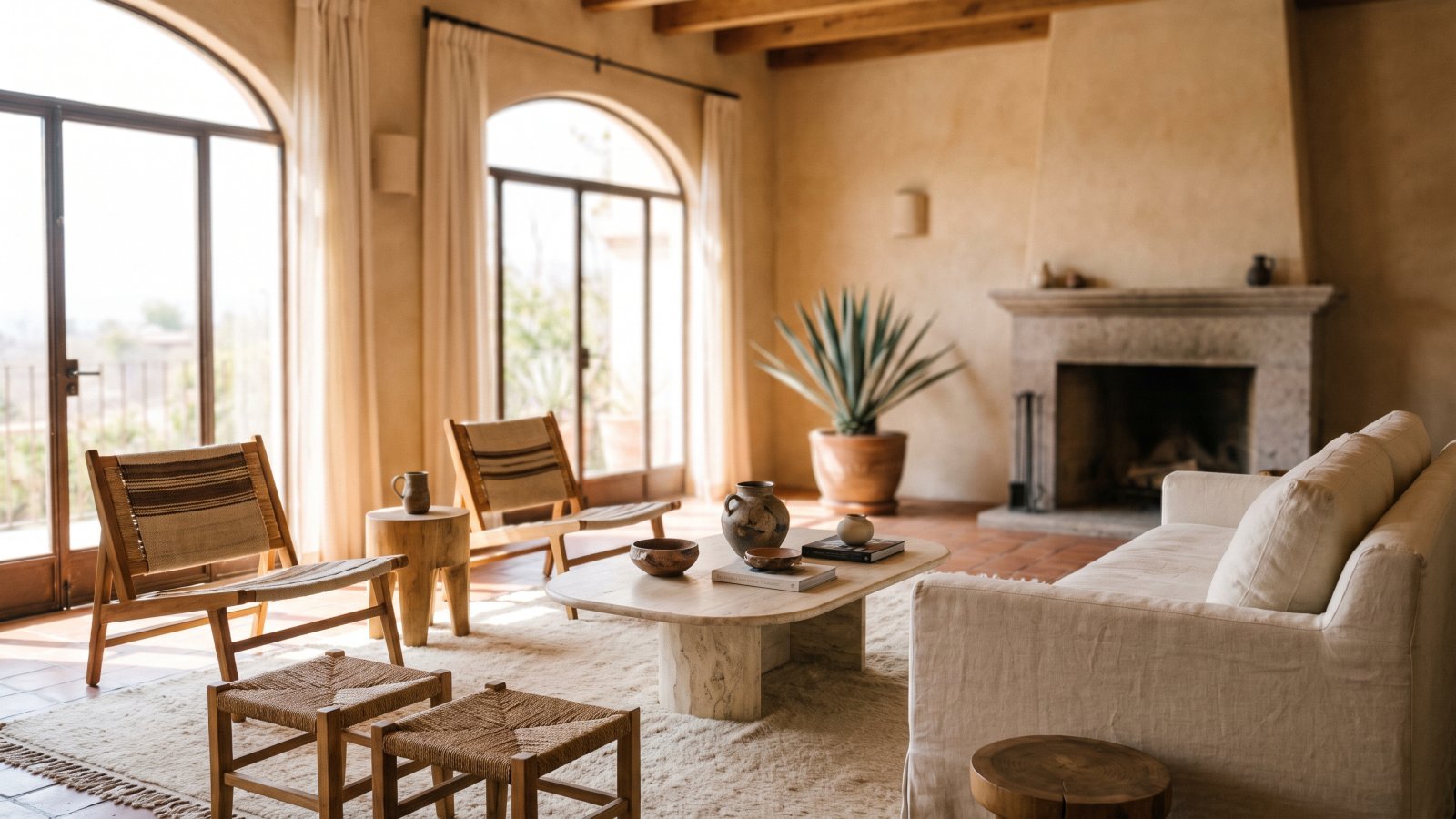
Interior photography: a complete guide for designers and architects
The complete guide to making an interior design project look in a portfolio, in press and on social media exactly as good as it feels walking through it.
An interior design studio lives off its portfolio. A prospective client almost never walks a finished project before hiring — they decide based on photos. That makes interior photography the single most important marketing asset a design studio produces, and yet it remains one of the least understood categories — confused with real estate photography, outsourced at the last minute, or handled with the designer's phone on handover day.
This guide explains how it is properly produced, what sets it apart from real estate photography, and what it costs in Mexico.
Interior photography is not real estate photography
Both photograph lived-in spaces, but with different goals:
- Real estate photography. Sells or rents the property. It prioritizes making the full layout, size and light legible. The interior design is a bonus, not the protagonist.
- Interior photography. Sells the designer's work. It prioritizes material, composition, color, texture and construction detail. Showing the full layout of the space matters less than framing that explains one specific design decision.
That difference changes everything downstream: the framing, the lens, the light, even the order the home is shot in.
Before the shoot: styling matters more than the camera
In interior photography, 70% of the result is decided before the camera arrives. Here's what we review with the studio before every session:
- Actually finish the project. Obvious as it sounds, shooting with fixtures half-installed, construction protection still on, or furniture missing is the most common and most expensive mistake.
- Table and textile styling. Cushions, linens, fresh flowers or greenery, curated books and objects — few, not many — on the key surfaces.
- Consistent lighting. Bulbs of the same color temperature throughout the space; one cool bulb among warm ones is immediately obvious on camera even when it's easy to miss with the naked eye.
- De-personalize without sterilizing. Remove distractions — cables, remote controls, trash — but leave enough life that the space doesn't read as an empty model unit.
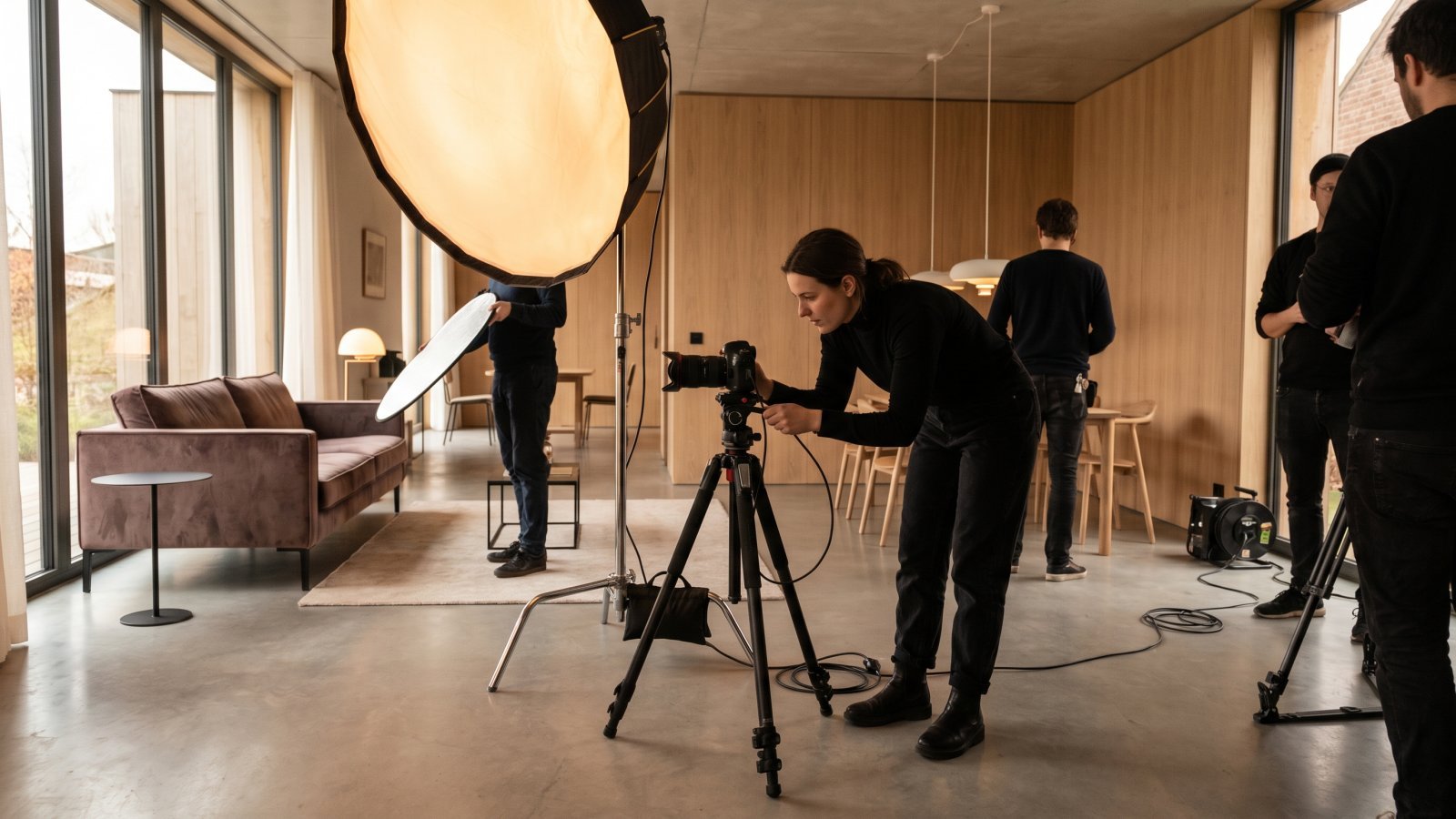
- Someone on styling duty on site. Either the designer or a stylist, someone needs to be adjusting cushions and objects between shots — that's what separates a catalog photo from a magazine photo.
Which shots designers and architects need on an interior design project
Standard coverage for a mid-size residential or commercial project includes:
- A wide shot of every room from whichever angle best explains the design intent — not necessarily from the doorway.
- A second angle of the main spaces (living room, dining room, primary bedroom) for context and depth.
- Vignettes or styled corners: a reading nook, a set table, a vanity — composed moments, not accidental ones.
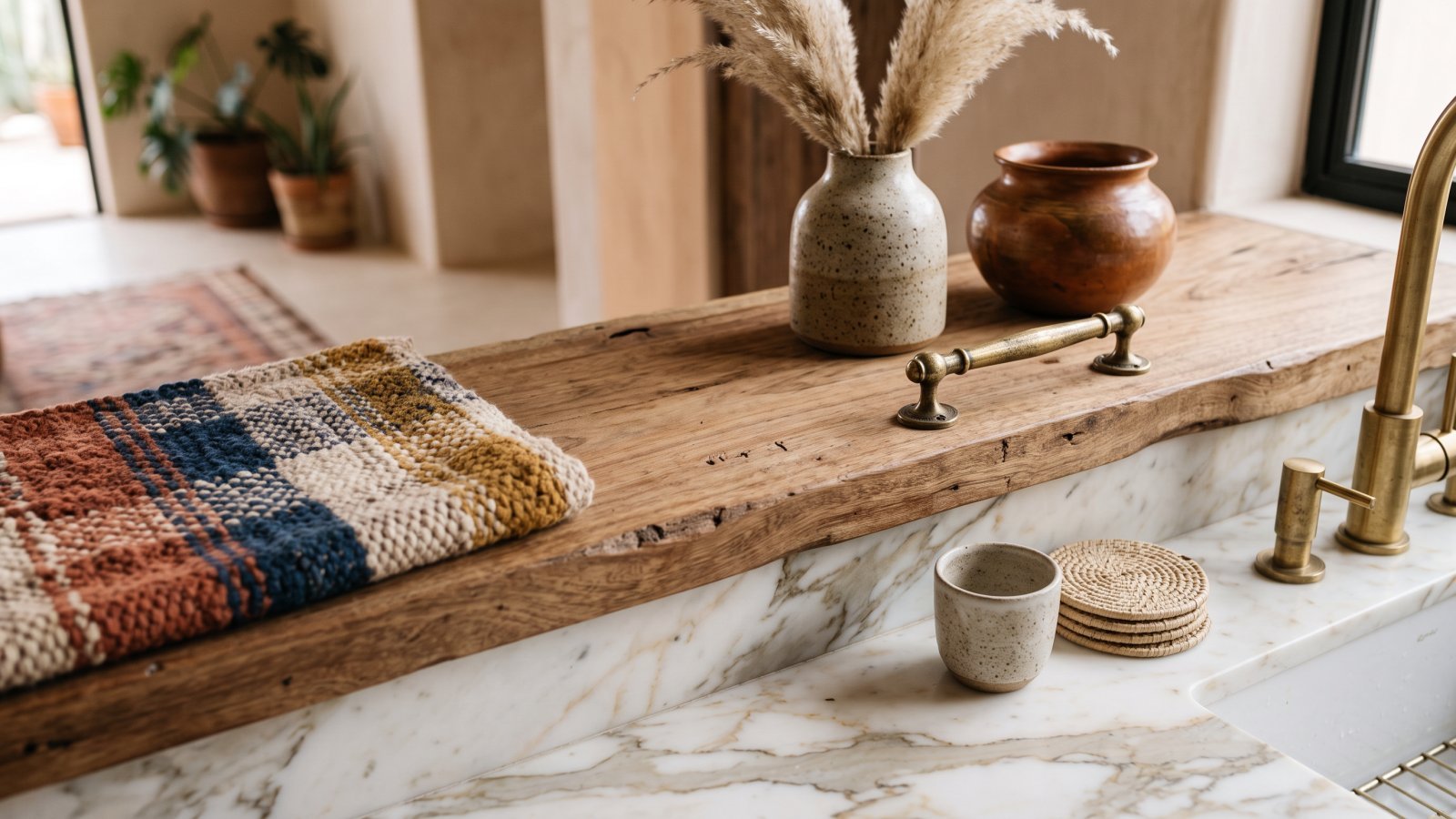
- Material and finish detail shots: wood grain, textile texture, hardware detail, a slab edge. This is what separates a design studio's portfolio from a brokerage's.
- The connection to the outdoors if the project has one: the relationship between interior and a terrace, garden or pool is often the design's central argument.
The technique: what makes an interior photo look "magazine-ready"
Natural light as the base, artificial light as support
Soft natural light — from a large window, never direct sun entering the frame — is the base for most shots. It's complemented with artificial light to balance hard shadows and to make sure the project's own fixtures read as switched on and contributing to the mood, not as blown-out white patches.
Corrected verticals, always
As in architectural photography, the vertical lines of walls and frames need to read straight. An interior with walls "falling" outward reads as unprofessional even when the eye can't say exactly why.
Composition, not just framing
The biggest difference versus real estate photography is composition time: moving an object two centimeters, turning a chair, waiting for light to enter at a specific angle. An interior session produces far fewer photos per hour than a standard real estate session — and it should.
What the material gets used for afterward
- Portfolio and website — the most frequent use, and the one that justifies the investment.
- Press and design magazines, which require resolution and clear editorial usage rights.
- Design awards and competitions, which almost always require professional photography as an entry requirement.
- Social media, where vertical crops of the same frames feed months of content.
- Vendors and brands that contributed to the project (furniture, lighting, finishes) often request material for their own marketing — worth defining the usage licence at the quote stage.
What interior photography costs in Mexico
Priced by type of space, not by the hour, so the studio knows exactly what it's getting.
Interior photography: packages and rates
Packages are priced by type of space. Add-on services — drone, styling, video, extended usage licences — are added to the base fee depending on what the project needs.
Interior design photography
Built for interior design studios, showrooms and commercial projects that need portfolio and editorial material.
| Type of project | Fee (MXN) |
|---|---|
| Single room | $6,500 |
| Apartment | $8,500 |
| House | $12,000 |
| Restaurant | $9,500 |
| Office | $10,500 |
Add-on services
These apply to every category and are added on top of the session fee.
| Service | Fee (MXN) |
|---|---|
| Aerial drone photography | From $2,500 |
| Styling / props | On request, quoted separately |
| Companion video (reel / walkthrough) | From $17,500 |
| Usage licence — print advertising and campaigns | $26,000 |
| Unlimited / extended commercial licence | $52,500 |
- Fees cover the creative rate (shoot + editing). The usage licence is agreed separately, based on where the images will finally be published.
- There may be an adjustment within each range depending on the size of the client, the logistics involved (travel, number of sessions) and whether the project targets the domestic or the international market.
A full residential project is almost always covered by the house package; a studio that needs to cover a showroom and an office on the same visit can combine both categories into one quote. The full rate card is at 2026 pricing.
Interiors + architecture: when it's worth shooting both
When the interiors studio worked on new construction or a major remodel, it's almost always worth complementing with architectural photography of the full building — façade, massing, relationship to its surroundings — in addition to the interior shots. They're two different narratives of the same project, and both are needed for awards and specialized publications.
Interior photography city by city
We work out of Puerto Vallarta and Guadalajara, with standing coverage across the Bajío region. Open your city’s page to see how we adapt interior photography to your project:
- Interior photography in Puerto Vallarta
- Interior photography in Guadalajara
- Interior photography in Querétaro
- Interior photography in Aguascalientes
- Interior photography in León
- Interior photography in Guanajuato
- Interior photography in Celaya
- Interior photography in Irapuato
- Interior photography in San Miguel de Allende
Is your project somewhere else? We cover the whole country, with travel quoted separately: tell us where it is.
Frequently asked questions about interior photography
How much does it cost to photograph an interior design project?
Packages start at $6,500 for a single room and scale up by number of spaces — a full apartment, house, restaurant or office. The full rate card is at 2026 pricing.
How long does an interior design shoot take?
Anywhere from half a day to a full day for a mid-size residential project, since careful styling and composition take longer per shot than a standard real estate session.
Who handles styling on shoot day?
Ideally the designer or a studio stylist joins the production to adjust objects and textiles between shots. If nobody is available, we can coordinate basic styling, but the result always improves with someone from the project on site.
Does the project need to be fully furnished?
Yes — for interior photography, final furnishing and decor need to be installed. Unlike a property for sale, here the furniture and finishes are the central argument of the photography.
Do you also shoot the building's architecture, not just the interior?
It can be added as a complementary service when the project calls for it — typically new construction or major remodels. It's quoted together with the interior package.
What format do you deliver for press and competitions?
High-resolution JPG ready for print and editorial publication, plus a web-optimized version. If a competition or magazine needs a specific format, we confirm it before delivery.
Quote the photography for your interior design project
Services mentioned in this article
Hotel Photographer
Rooms, amenities and dining that hold up your rate on Booking, Expedia and paid campaigns.
🏛️Architectural Photographer
Corrected perspective: the project you publish, enter into competitions and keep in your portfolio.
🔑Airbnb Photographer
The first photograph decides the click. Images ready for Airbnb, Booking.com and VRBO.
🚁Drone Photographer
The site, the amenities and the setting: what no ground-level frame can show.
Xavier Manuel
Architecture, hospitality and interior photographer. He runs Foto de Arquitectura out of Puerto Vallarta and Guadalajara, with productions across Riviera Nayarit, Tepic and the Bajío region.
More from the blog
 Golden-hour photo charter: Puerto Vallarta from a yachtThe town faces west, so at sunset you only see it head-on from the water. Route, timing, gear, camera settings and which boat to charter to photograph the bay.Read the article →
 Fishing charter in Puerto Vallarta: what to do when you visitWhat we tell clients who fly in for a shoot and have a free day: go fishing. What a private charter looks like, inshore vs offshore, seasons, costs and how to photograph the day.Read the article →
 Drone photography: a guide and regulations in MexicoWhen aerial photography is worth it, what Mexico's AFAC requires to fly a drone, and what it costs to add aerial coverage to your shoot.Read the article →