Marketing for architects in Mexico: practical 2026 guide
A practical guide for firms that want to stop depending on the lucky referral and build a flow of projects they can repeat.
Almost every architecture firm we know in Mexico wins work the same way: somebody knows somebody. It works, until it stops working. This guide is the other route: the channels that genuinely bring projects to a Mexican firm, the order in which to tackle them, and why all of them — every single one — rest on the same asset most firms do not have ready.
We photograph buildings out of Puerto Vallarta and Guadalajara, with projects in Tepic, Riviera Nayarit and the Bajío. That puts us in an odd position: we see dozens of firms’ portfolios exactly as they are being assembled, and we see which ones close clients and which do not. What follows comes from that, not from a generic marketing manual.
Why a firm’s marketing looks like nothing else
An architecture firm sells something awkward to sell: a service that is expensive, long, hard to compare and bought only a few times in a client’s life. That changes all the rules.
- The decision cycle runs in months, not days. Nobody sees an advert and commissions a full set of construction drawings that afternoon. The goal is not the immediate sale — it is being present when the client finally decides.
- Volume does not matter; fit does. A firm does not need a thousand leads. It needs five of the right size a year. A strategy that brings a hundred enquiries from people who wanted an $8,000 floor plan is a failed strategy.
- Trust transfers through visual evidence. The client cannot assess your structural judgement or your handling of building codes. They assess the only thing they understand: how what you have already built looks.
- Your real competitor is not another firm. It is the builder who “also does drawings” and charges a third of the price. All of your marketing must explain, without saying so, why that is not the same thing.
The asset almost no firm has ready
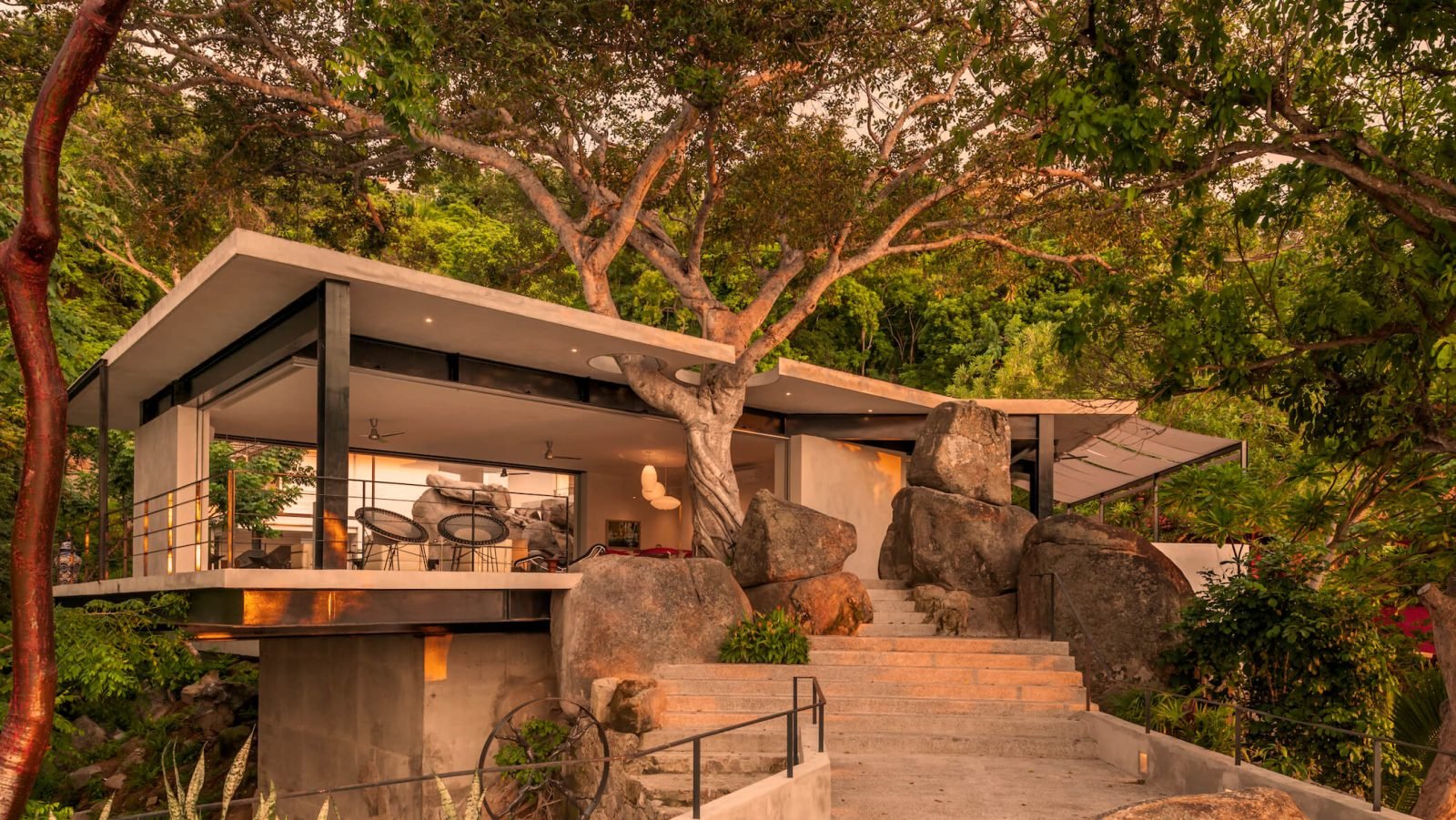
Here is the bottleneck we see again and again: the firm has ten completed buildings and not one of them photographed properly. There are phone snaps taken on handover day, under midday light, with cables still up and the verticals falling inwards. That is expected to feed the website, the Instagram feed, the client proposal and the award submission.
It cannot. Professional project photography is not a luxury you pay for when there is budget left over: it is the raw material for everything else. Without it there is no portfolio, no press feature, no social presence and no proposal that holds up. And it has a cruel quirk: if the building is not photographed at the right moment — finished, furnished, before the client hangs their own things and modifies the project — that opportunity does not come back.
What separates a portfolio photo from a phone photo
The technical difference is concrete, and it shows even to someone who knows nothing about photography:
- Corrected perspective. In architecture, verticals stay vertical. It is achieved with tilt-shift optics or with correction in processing, and it is the first thing that gives an amateur photo away.
- Chosen light, not whatever was there. You go back to the building at the hour the sun comes in where the architect intended it to. Sometimes that means two visits.
- A clean frame. Cables, bins, signage, badly parked cars, the photographer’s reflection in the glass. All of it is resolved before the shutter or in post.
- Dynamic range. An interior with a window needs both the interior and the view to read. That is an exposure blend, not a single photo.
- A narrative. Twenty photos that tell the journey through the project are worth more than a hundred loose frames of the same angle.
The seven channels that work for a firm in Mexico
1. Your own portfolio site (the only channel you own)
Instagram lends you an audience; your site belongs to you. An architecture portfolio does not need to be complex: it needs to load fast, look impeccable on a phone, and have one page per project with twenty good photographs, the technical sheet and the problem you solved. That last point is the one almost nobody writes and the one that converts: the client is not buying “a house on the beach”, they are buying “a sloping site with a compromised view, resolved across three stepped levels”.
Add service pages built around local search — “architect in Puerto Vallarta”, “architecture firm in Guadalajara” — and you have a channel that works while you sleep. If you would rather not build it yourself, that is exactly what we do with web design for architects, constructed on the firm’s own photographs.
2. Google: the most underrated channel in the profession
While the profession fights over likes, there are people typing “architect for a house in Nuevo Vallarta” into Google with their card already in hand. Two moves cover almost all of it:
- A complete Google Business Profile, with the right category, service area and — crucially — real photos of finished work, not renders. Reviews from previous clients weigh heavily in local decisions.
- Content that answers early-stage questions: what an architectural project costs, what it includes, how long a building permit takes in a given municipality. Whoever is searching for that is months away from hiring, and whoever answers first usually keeps the project.
3. Instagram and Pinterest, used as a catalogue
Instagram works for architecture because it is visual, but it is used badly: the render gets posted during the sales phase and the finished building never does. A firm’s feed should read as a portfolio in miniature. Post series, not single photos: five images of the same project telling the journey through it, with the construction detail you are proud of.
Pinterest, which almost nobody in the profession works in Mexico, is a search engine dressed up as a social network, and the people building “house I want to build” boards are literally your client in the dreaming phase.
4. Features in specialist media
Appearing in an architecture publication gives you something adverts cannot buy: third-party validation. Publications receive hundreds of submissions and reject almost all of them for the same reason — insufficient photographic material. A competitive submission carries 15 to 25 high-resolution images, clean drawings in vector format, a complete technical sheet and a short text explaining the architectural approach. If your project does not have that ready, it is not ready to be submitted.
5. Competitions and awards
A mention in an architecture award is worth a year of social posting, and the requirements are the same: photos and drawings. It is the same package you prepared for the publication. Which is why it pays to think of the photo shoot as an investment amortised across four or five different uses, rather than a per-project expense.
6. Partnerships: the channel that pays off fastest
A firm’s best prospects do not come from the general public, they come from whoever is already working with that client:
- Interior designers and decorators, who take on projects that need building work.
- Developers and builders, who need firms that understand timelines and costs.
- Real estate agents, especially in renovation areas and among foreign buyers.
- High-end suppliers: kitchens, fine joinery, glazing, lighting. They see the project before anyone else.
A partnership is activated with something concrete, not a coffee: share the photographs of the project you collaborated on, credited to both of you. That turns your photo shoot into material the other party also wants to publish, and puts you in front of their audience without spending a peso.
7. Referrals, but systematised
You already have the spontaneous referral. What is missing is prompting it: when you hand over the building, hand over a small package of professional images of the project too, so the client can show it off. Nobody shares ugly photos of their new house; everybody shares beautiful ones. It is the cheapest referral mechanism there is and almost nobody uses it.
How each market plays: Vallarta, Guadalajara, Tepic and around
The same firm needs a different pitch depending on where it is competing. These are the four markets we work in most, and how they behave.
Puerto Vallarta and Banderas Bay
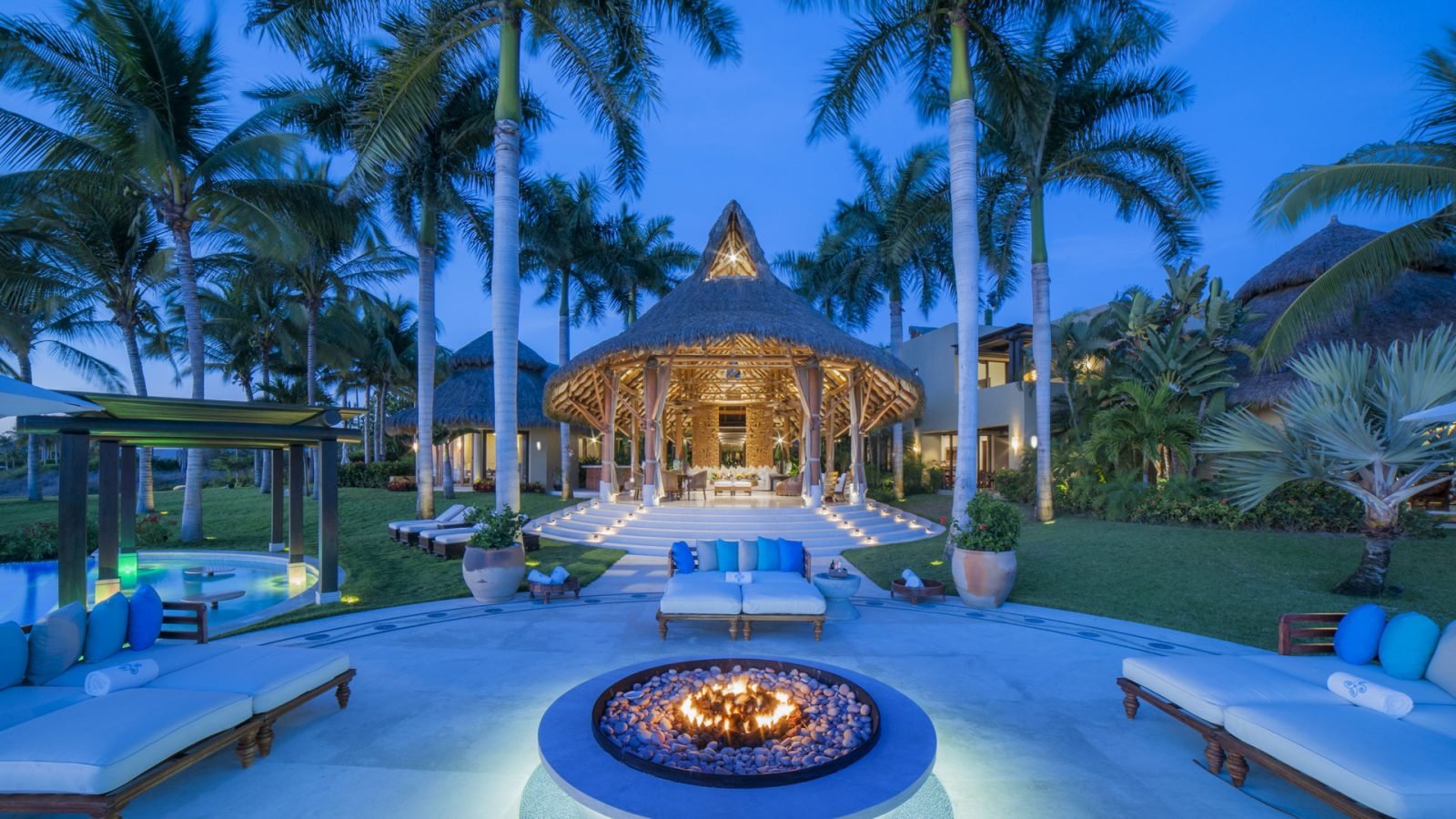
A market with a strong presence of foreign buyers and vacation-rental investment. The client often decides remotely, from the United States or Canada, on the evidence of your website alone. The practical consequences: an English portfolio stops being optional, photographic quality counts double because it stands in for the site visit, and the argument that closes most often is operation — climate, salt air, maintenance, rental yield — not aesthetics alone. There is also constant demand here for condominium renovation, a niche many firms ignore and an excellent way in. See how we work in photography and video in Puerto Vallarta.
Guadalajara and its metropolitan area
A far more competitive and more professionalised market, with a large profession, strong architecture schools and clients who already know how to compare. Generic marketing dissolves here: standing out demands real specialisation — vertical housing, corporate, hospitality, heritage in the historic centre — and a presence in the local circuit of events and media. It is also the market where well-made technical content pays off most, because the Guadalajara client researches before calling. Our work in the city is at Foto de Arquitectura in Guadalajara.
Tepic, Riviera Nayarit and around
A corridor in full expansion and probably the biggest opportunity for a young firm. Tepic works as the service base for the whole state, with institutional, commercial and mid-market housing work; and less than an hour away the Nuevo Nayarit–Bucerías–Punta Mita–Sayulita–San Pancho corridor begins, where the luxury villas, boutique hotels and pre-sales are concentrated. It is a market where there are still few firms with a genuinely presentable portfolio, and where a solid photo shoot puts you ahead of the competition almost immediately. We cover the whole area from Puerto Vallarta, with no travel charge within the bay.
The Bajío
Querétaro, León, Guanajuato, Celaya, Irapuato and San Miguel de Allende form a different market: industrial and logistics on one side, heritage and tourism on the other. A firm that can move between an industrial shed and a house in a historic centre has two businesses in one there.
What it costs to start
The honest question every firm asks is how much has to go in. Photography is the line item most often postponed and the one that returns the most, so we publish our rates so you can budget without guessing.
What documenting your building costs
The creative fee for an architecture session: planning, the production day and post-production of the final images.
Architectural photography
Quoted by shoot hours and number of final images delivered, with perspective correction and post-processing included.
| Type of project | Fee (MXN) |
|---|---|
| Home / basic session (5 h, 20–25 images) | $10,000 |
| Portfolio / publication (8 h, 30 images) | $16,000 |
| Premium residence / full project (10 h, 40 images) | $23,500 |
| Corporate building / real estate development | From $18,000 |
| Institutional project | From $22,000 |
- Fees cover the creative rate (shoot + editing). The usage licence is agreed separately, based on where the images will finally be published.
- There may be an adjustment within each range depending on the size of the client, the logistics involved (travel, number of sessions) and whether the project targets the domestic or the international market.
One useful way to read it: if the construction documents for a house represent several hundred thousand pesos in fees, putting a fraction of a single project towards photographing it properly is the marketing investment with the best return available, because that material is used on the site, on social, in the proposal to the next client, in the publication and in the award.
Five mistakes that throw the effort away
- Publishing only renders. The render sells the project that does not exist; the photograph proves you can build it. A portfolio made entirely of renders tells the client you may never have delivered anything.
- Waiting for “the good project”. Five buildings pile up unphotographed while the flagship is awaited. By the time it arrives, the previous five have changed owner or furniture.
- Not securing publication permission in writing. Get it signed into the contract from the outset, especially in residential and hospitality work. Asking two years later almost always ends in silence.
- Confusing followers with clients. Ten thousand followers who will never build are worth less than three hundred local contacts of the right profile.
- Not tracking where each project came from. A spreadsheet with two columns — project, and how it arrived — is enough for you to know exactly where to invest within a year.
A 90-day plan, in order
If the firm is starting from zero, this is the order that wastes the least money:
- Days 1–15. Choose the three completed projects that best represent what you want to build again. Not the biggest: the closest to the work you are after.
- Days 15–40. Photograph them. Get the owner’s permission, prepare the spaces and schedule the shoot in the right light season. Everything else comes out of this.
- Days 40–60. Publish the site with one page per project and text explaining the problem you solved. Open and complete the Google Business Profile.
- Days 60–75. Load the material onto social in series, and send the strongest project to two publications and one award.
- Days 75–90. Activate three concrete partnerships by sharing the images with joint credit, and ask the clients of those three buildings for a review.
At the end of the 90 days the firm has what it did not have before: its own material, a searchable presence and three allies with an incentive to recommend it. That no longer depends on luck.
If you would rather have someone execute it with you, that is exactly the digital marketing for architects service we offer: photography, site, local SEO and campaigns in the same order as this plan, with a monthly report of enquiries instead of likes.
Architectural photography city by city
We work out of Puerto Vallarta and Guadalajara, with standing coverage across the Bajío region. Open your city’s page to see how we adapt architectural photography to your project:
- Architectural photography in Puerto Vallarta
- Architectural photography in Guadalajara
- Architectural photography in Querétaro
- Architectural photography in Aguascalientes
- Architectural photography in León
- Architectural photography in Guanajuato
- Architectural photography in Celaya
- Architectural photography in Irapuato
- Architectural photography in San Miguel de Allende
Is your project somewhere else? We cover the whole country, with travel quoted separately: tell us where it is.
Frequently asked questions about marketing for architects
How much should an architecture firm invest in marketing?
There is no universal percentage, but there is an order of priority: first the photographic record of completed work, then the website and the Google Business Profile, and only at the end paid advertising. Investing in ads without good material is paying for more people to see a weak portfolio. You can look through our 2026 pricing to budget the first part.
Do Google or Meta ads work for a firm?
They work, but they are rarely the first move. They perform best when a solid portfolio already exists along with a specific landing page — condominium renovation in Puerto Vallarta, say — and not as a way of “getting known” in general. With decision cycles measured in months, most firms get more out of content and local presence than out of paid media.
Can I publish photos of a house without the client’s permission?
The prudent course is to agree it in writing in the project contract, stating that the firm may publish images of the completed work for portfolio and promotional purposes. In high-value residential and in hospitality it is common for the owner to ask that the exact location or the name be omitted; that is almost never a problem when agreed up front.
How often should work be photographed?
The practical rule is to photograph every project you want to sell again, as soon as it is finished and furnished. For a firm with two or three handovers a year, that means two or three sessions. Letting work pile up unphotographed is the commonest way to lose the material for good.
Do I need photos and renders, or is one enough?
They serve different functions and sit well together: the render sells what does not yet exist and the photograph proves what you have already delivered. The problem appears when the portfolio is renders only, because the client cannot tell the built from the imagined.
I work in Tepic or Riviera Nayarit — do you cover the area?
Yes. We operate out of Puerto Vallarta and Guadalajara, and we routinely cover Tepic, Nuevo Nayarit, Bucerías, Punta Mita, Sayulita and San Pancho. Within Banderas Bay we charge no travel; for the rest of the state it is quoted separately and confirmed before the session is booked.
Ready to photograph your work?
Services mentioned in this article
Hotel Photographer
Rooms, amenities and dining that hold up your rate on Booking, Expedia and paid campaigns.
🛋️Interior Photographer
Materials, natural light and styling, so your work reads as well on screen as it does on site.
🔑Airbnb Photographer
The first photograph decides the click. Images ready for Airbnb, Booking.com and VRBO.
🚁Drone Photographer
The site, the amenities and the setting: what no ground-level frame can show.
Xavier Manuel
Architecture, hospitality and interior photographer. He runs Foto de Arquitectura out of Puerto Vallarta and Guadalajara, with productions across Riviera Nayarit, Tepic and the Bajío region.
More from the blog
 Golden-hour photo charter: Puerto Vallarta from a yachtThe town faces west, so at sunset you only see it head-on from the water. Route, timing, gear, camera settings and which boat to charter to photograph the bay.Read the article →
 Fishing charter in Puerto Vallarta: what to do when you visitWhat we tell clients who fly in for a shoot and have a free day: go fishing. What a private charter looks like, inshore vs offshore, seasons, costs and how to photograph the day.Read the article →
 Interior photography: the complete guideHow an interior design project is photographed so it reads in a portfolio and in press exactly as it feels in person: light, styling, framing and what it costs.Read the article →