
Real estate marketing: 2026 guide for agents in Mexico
A guide for agents, agencies and developers competing for the attention of a buyer who has already seen the property before picking up the phone.
Fifteen years ago the real estate agent controlled the information: the buyer had to call to find out what was available. Today the buyer arrives with a shortlist, compared prices and an opinion already formed. Real estate marketing stopped being “getting them to call you” and became “getting your property to survive the first three seconds of scrolling”.
This guide is for agents, agencies and developers working in Mexico, with examples from the markets we know first-hand: Puerto Vallarta and Banderas Bay, Guadalajara, Tepic and Riviera Nayarit.
The buyer decided before calling you
The typical journey is always the same: someone searches a portal or Google, filters by area and price, and scrolls results on a phone. On that screen your property does not compete on its real value or on your experience as an adviser: it competes with a thumbnail and a price. If the thumbnail does not win the click, the rest of your work does not exist.
Three uncomfortable but useful consequences follow:
- The first filter is visual, not rational. Nobody reads the description of a listing whose main photo is dark, crooked or shot into the light.
- The call arrives late in the process. By the time the prospect makes contact, they have already self-selected. Your earlier work determines what kind of prospect arrives.
- Comparison is instantaneous. Your listing sits next to the competition, in the same grid, at the same size. It is the most honest shop window there is.
The cover photo is the advertisement
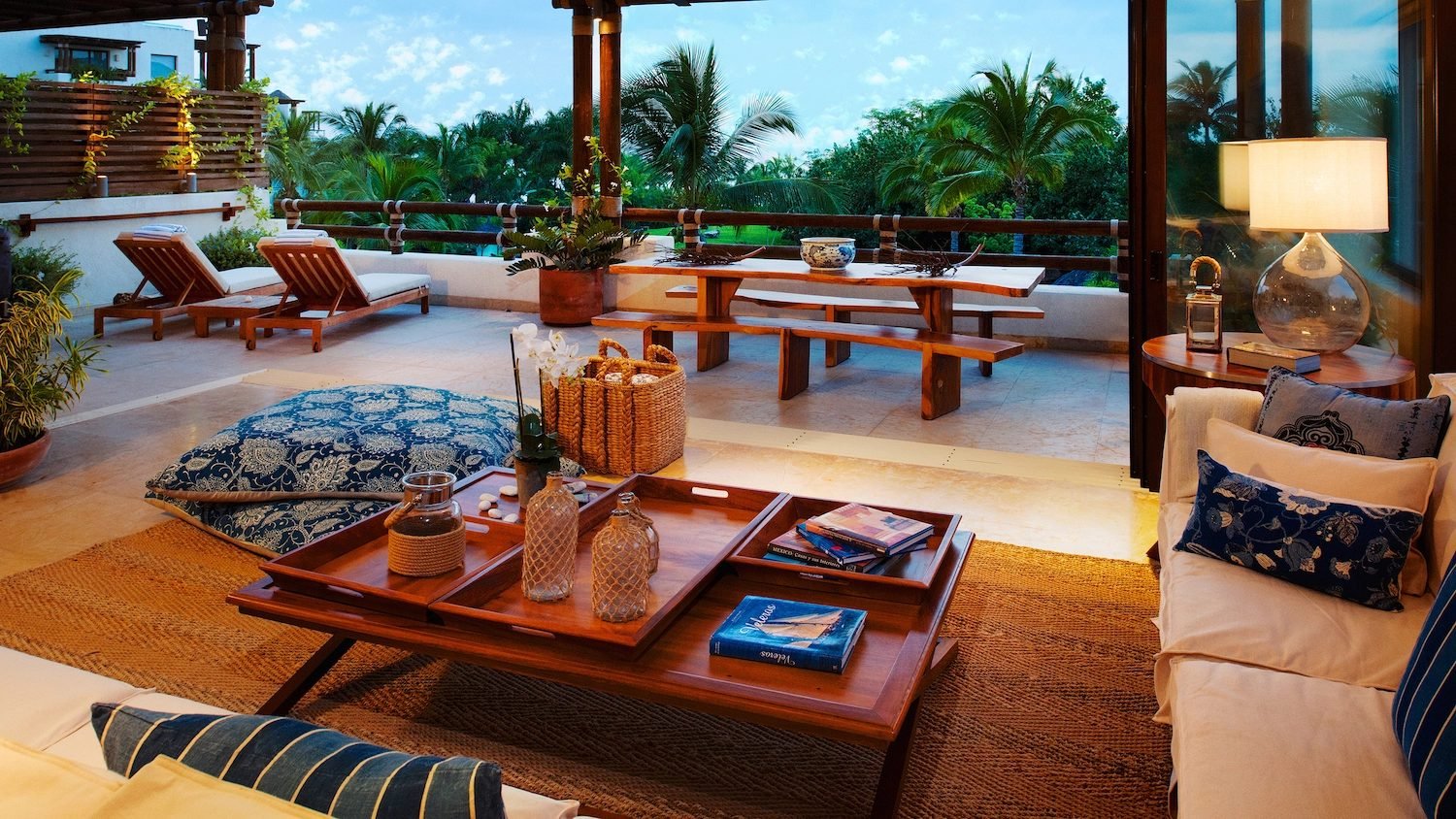
If you can only fix one thing in your marketing, fix that image. The cover has to meet three conditions: show the property’s strongest selling point — the view, the pool, the open living area, the façade — be taken in favourable light, and read well as a thumbnail, which is how 90% of people will see it first.
The mistakes repeated across every Mexican portal are surprisingly basic: vertical phone photos in a format designed for landscape, interiors where the window is blown out to white, rooms with an unmade bed, garages as the first image, or the classic façade shot with the agent’s car parked in front. None of that needs budget to fix; it needs judgement and a properly produced session.
What a property listing needs today
A complete listing, from most important to least:
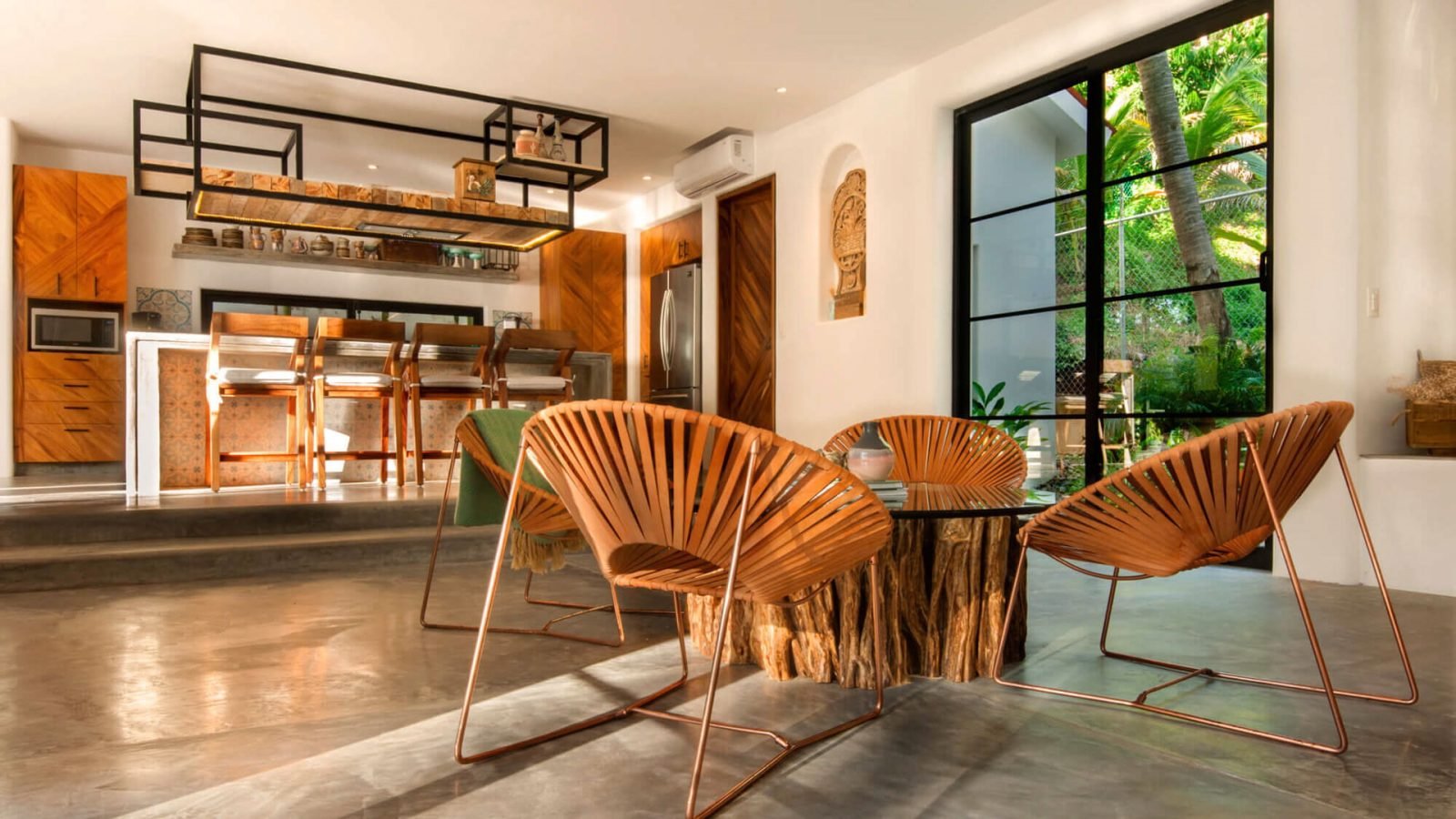
- 20 to 30 professional photographs, covering every space, in narrative order: exterior, living areas, kitchen, bedrooms, bathrooms, outdoor space and amenities. How they are produced is set out in the guide to real estate photography.
- One aerial frame when the setting adds something: beachfront, golf course, proximity to the sea, position within the development. It is the argument no ground-level photo can make.
- A short video, 30 to 60 seconds, vertical for social and horizontal for the portal.
- A floor plan. Wildly underrated: it answers the “how is it laid out” question no photo can.
- A description written for humans, not a list of abbreviations. What it feels like to live there, what is five minutes away, who it suits.
- Complete and honest data: land and built area, year, maintenance fees, ownership structure, and whether a bank trust applies in the restricted zone.
Video, drone and virtual tours: what earns its place
The rule is simple: each format must answer a question the others cannot.
- Photography. Answers “what does it look like”. The only genuinely indispensable one.
- Aerial drone photography. Answers “where is it”. Essential on the coast, on land and in developments; dispensable for an inward-facing apartment.
- Video. Answers “what does moving through it feel like”. It works very well on social, but a bad video does more damage than no video.
- 360° virtual tour. Answers “how do the spaces connect”. Especially useful with remote buyers, who in Vallarta and Nayarit are the majority.
If the budget is limited, that is exactly the order of investment. A drone photography and video package resolves the first three in a single production, and costs less than booking them separately.
Where to publish in Mexico
Portals
Inmuebles24, Vivanuncios, Lamudi, Casas y Terrenos and Propiedades.com concentrate a good share of national traffic; in resort areas, portals aimed at foreign buyers are added to the mix. Two practical criteria: upload the maximum number of photos the portal allows — incomplete listings rank worse and convert less — and mind the title, which is the only text visible in the listing grid.
MLS and collaborative work
In organised markets — Puerto Vallarta is Mexico’s best example, with a very established MLS and AMPI culture — the property is shared with the whole network of agents and the commission is split. There the photographic material pays off twice over: it is used not only by whoever listed it, but by dozens of agents working your exclusive. Publishing an exclusive with mediocre photos on an MLS is, literally, asking a hundred colleagues to sell your property badly.
Social media
Instagram and Facebook remain the cheapest discovery channel, and they work better with content about a specific property than with motivational quotes. The best-performing format is the short vertical walkthrough with the strongest image first. TikTok has proved very effective for mid-priced property and pre-sales. YouTube, by contrast, suits high-value property where the buyer researches the area before the house.
Your own site and email
Portals rent you attention; your site accumulates it. A website with its own page per property, good speed and area-focused text — “living in Nuevo Nayarit”, “buying in Zapopan” — captures searches the portal never forwards to you. And a mailing list of previous buyers and warm prospects is still the channel with the best return in the profession, because these are people who already know you.
Pre-sales and development: a different game
Selling what does not yet exist changes the problem: there is no property to photograph. The material is built in three layers: renders for the product, real photography of the setting and of construction progress, and professional photography of the show unit as soon as it is ready. That third layer is the one almost everyone postpones and the one that most accelerates sales, because it is the first evidence that the development is real and that the promised finishes exist.
One piece of advice we always give developers: photograph the show home or apartment before opening it to visits. After three months of walkthroughs, no space ever looks the same again.
Real estate marketing by market: strategy for agents
Puerto Vallarta and Banderas Bay
A market with a strong foreign-buyer and second-home component, frequent transactions in dollars and decisions taken remotely. That defines the whole approach: material in English, high photographic quality because it substitutes for the physical visit, virtual tours, and rental arguments — occupancy, high season, management — because many purchases are investments. MLS culture is strong, so the material has to be ready for other agents to use. See photography and video in Puerto Vallarta.
Guadalajara and its metropolitan area
A mostly local or domestic buyer, usually with a mortgage involved, and a great deal of vertical housing and pre-sales in corridors such as Zapopan and Providencia. Price, location relative to work and the building’s amenities weigh more here than any scenic argument. Competition per listing is high, so the difference is made with complete listings, a floor plan included and good photography of the common areas, which is what is actually being bought in vertical housing. See Foto de Arquitectura in Guadalajara.
Tepic, Riviera Nayarit and around
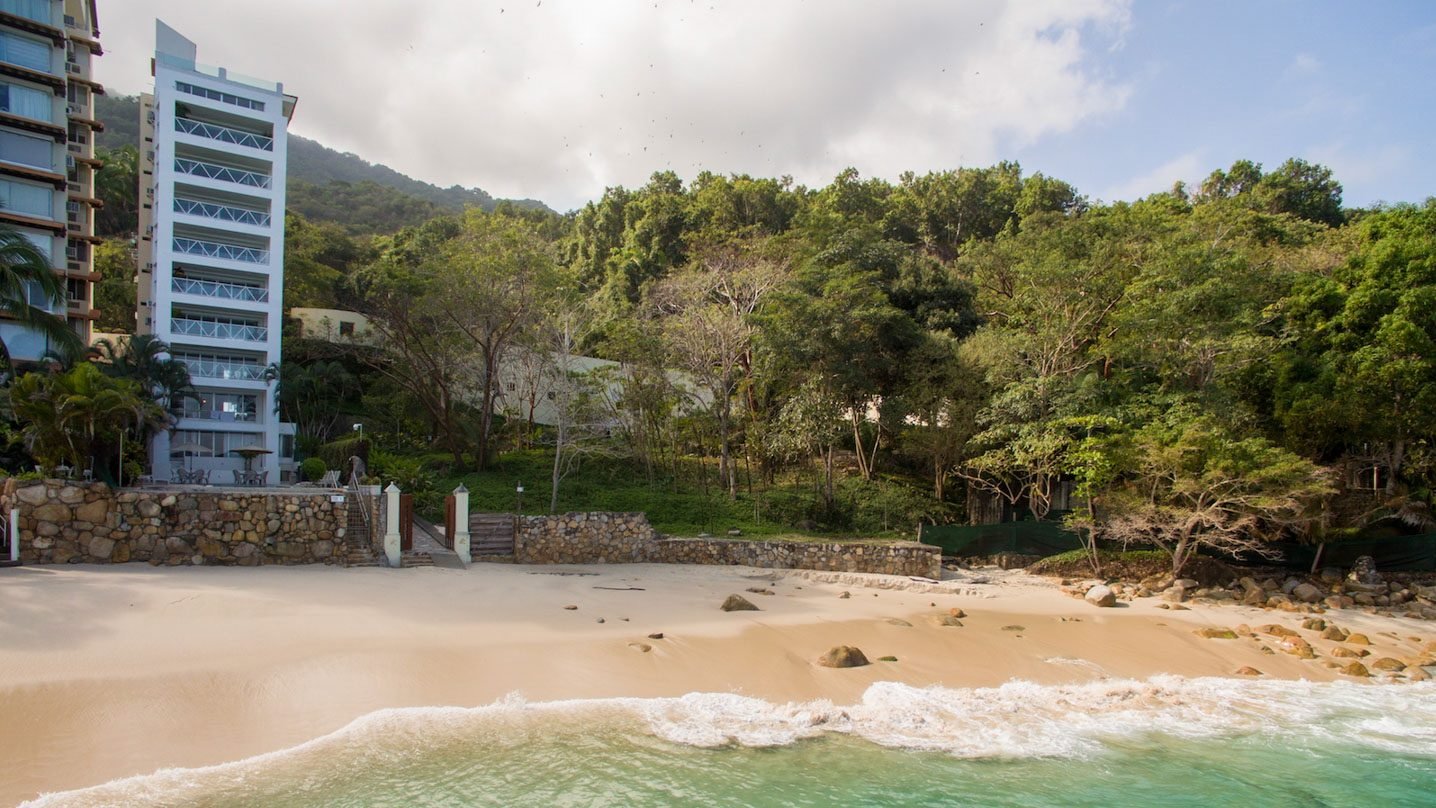
Two markets in one. Tepic is a local housing and land market, with a buyer who decides in person and where there are still few well-photographed listings: whoever turns up with professional material stands out immediately. The coastal corridor — Nuevo Nayarit, Bucerías, La Cruz de Huanacaxtle, Punta Mita, Sayulita, San Pancho, Lo de Marcos — behaves like Vallarta: foreign buyers, pre-sales, villas and boutique hotels, with location as the central argument. There the aerial shot is not an extra, it is the advertisement.
What the material costs
These are the rates for the two lines the real estate sector uses most: fixed packages by number of photos for properties for sale or rent, and a per-project session when it is a development or material for a developer.
What a property’s material costs
Packages by number of photos work for individual properties; the per-project session applies to developments, buildings and corporate material.
Airbnb and vacation rental photography
Fixed packages by number of final photos, ready to publish on Airbnb, Booking.com and VRBO.
| Package | Fee (MXN) |
|---|---|
| Basic (15 photos) | $5,500 |
| Standard (25 photos) | $7,000 |
| Premium (40 photos) | $8,500 |
| Premium + drone (40 + 8 photos) | $10,500 |
Architectural photography
Quoted by shoot hours and number of final images delivered, with perspective correction and post-processing included.
| Type of project | Fee (MXN) |
|---|---|
| Home / basic session (5 h, 20–25 images) | $10,000 |
| Portfolio / publication (8 h, 30 images) | $16,000 |
| Premium residence / full project (10 h, 40 images) | $23,500 |
| Corporate building / real estate development | From $18,000 |
| Institutional project | From $22,000 |
- Fees cover the creative rate (shoot + editing). The usage licence is agreed separately, based on where the images will finally be published.
- There may be an adjustment within each range depending on the size of the client, the logistics involved (travel, number of sessions) and whether the project targets the domestic or the international market.
In context: on a transaction whose commission runs into tens or hundreds of thousands of pesos, the cost of the visual material is a small fraction — and it is the only thing working for you twenty-four hours a day, across every portal at once. The full price list is on 2026 pricing.
Six expensive mistakes
- Shooting on a phone “for now”. That “for now” usually lasts exactly the three months when the property had the most traction for being new.
- Publishing with the property occupied and untidy. No amount of editing fixes an unmade bed or a counter full of dishes.
- Using the developer’s photos with someone else’s watermark or recycling images of another unit in the same building. It breeds distrust and, when the image does not match, real problems.
- A listing with no price. “Price on request” filters out most of the serious buyers who are comparing.
- Neglecting follow-up. A good listing is useless if the prospect waits two days for a reply. In areas with foreign buyers, the time difference makes the first hour decisive.
- Not measuring. Record which portal or network each enquiry came from. Within three months you will know which to pay for and which to drop.
A launch plan for a new exclusive
- Before the session. Agree a deep-clean and depersonalisation day with the owner; ask them to remove personal items, fridge magnets and bathroom products.
- The session. Complete professional photography, aerials if the setting adds something, and a short video in the same visit.
- Week 1. Publish on portals and MLS with the full listing: 25 photos, floor plan, description and price.
- Weeks 1–2. Push it on social with the vertical walkthrough, and send the property to your mailing list before anyone else.
- Weeks 3–4. Review the portal metrics. If there are views and no enquiries, the problem is the price or the description, not the photos. If there are not even views, the problem is the cover image.
That last diagnostic is the most useful tool in this guide: few views is an image problem; many views without enquiries is a price or information problem. Almost everything attributed to “the market is slow” falls into one of those two boxes.
And if the problem is image or reach rather than price, we solve it end to end: property photography plus a digital marketing service for real estate, developments and hotels with one landing page per project, campaigns targeted by market and a monthly report of enquiries.
Property and rental photography city by city
We work out of Puerto Vallarta and Guadalajara, with standing coverage across the Bajío region. Open your city’s page to see how we adapt property and rental photography to your project:
- Property and rental photography in Puerto Vallarta
- Property and rental photography in Guadalajara
- Property and rental photography in Querétaro
- Property and rental photography in Aguascalientes
- Property and rental photography in León
- Property and rental photography in Guanajuato
- Property and rental photography in Celaya
- Property and rental photography in Irapuato
- Property and rental photography in San Miguel de Allende
Is your project somewhere else? We cover the whole country, with travel quoted separately: tell us where it is.
Frequently asked questions about real estate marketing
How many photos should a property listing have?
Between 20 and 30 for a standard house or apartment, covering every space and the amenities. Upload the maximum each portal allows: incomplete listings rank worse within the portal and read as careless. For large properties or developments it is worth going past 40.
How much does photography cost for a property for sale or rent?
Our packages for an individual property start at $5,500 for 15 final photos and run up to packages with drone. For developments, buildings or corporate material we apply the per-project rate, which starts at $10,000. The detail is on 2026 pricing.
Is a drone worth it for a property?
It is worth it when the location is part of the value: beachfront, a view, proximity to the sea or the golf course, land, and properties inside a development with amenities. For an inward-facing city apartment it adds little. Flight restrictions near airports also have to be checked.
Can I use the developer’s photos in my listing?
Only with express authorisation, and even then it is worth having your own material: developer images are usually generic shots of the model rather than of the unit you are selling. Using someone else’s photos carrying another agency’s watermark undermines credibility and can create conflicts.
I am selling pre-construction and nothing is built — what do I do?
You work in layers: renders of the product, real photography of the setting and of construction progress, and a professional session of the show apartment or house as soon as it is finished and furnished. That last one accelerates sales the most, because it proves the promised finishes exist.
Do you work in Tepic and Riviera Nayarit?
Yes. We routinely cover Tepic, Nuevo Nayarit, Bucerías, La Cruz, Punta Mita, Sayulita and San Pancho from our base in Puerto Vallarta, as well as Guadalajara and the Bajío. Within Banderas Bay we charge no travel.
Get a quote for your properties’ material
Services mentioned in this article
Hotel Photographer
Rooms, amenities and dining that hold up your rate on Booking, Expedia and paid campaigns.
🏛️Architectural Photographer
Corrected perspective: the project you publish, enter into competitions and keep in your portfolio.
🛋️Interior Photographer
Materials, natural light and styling, so your work reads as well on screen as it does on site.
🚁Drone Photographer
The site, the amenities and the setting: what no ground-level frame can show.
Xavier Manuel
Architecture, hospitality and interior photographer. He runs Foto de Arquitectura out of Puerto Vallarta and Guadalajara, with productions across Riviera Nayarit, Tepic and the Bajío region.
More from the blog
 Golden-hour photo charter: Puerto Vallarta from a yachtThe town faces west, so at sunset you only see it head-on from the water. Route, timing, gear, camera settings and which boat to charter to photograph the bay.Read the article →
 Fishing charter in Puerto Vallarta: what to do when you visitWhat we tell clients who fly in for a shoot and have a free day: go fishing. What a private charter looks like, inshore vs offshore, seasons, costs and how to photograph the day.Read the article →
 Interior photography: the complete guideHow an interior design project is photographed so it reads in a portfolio and in press exactly as it feels in person: light, styling, framing and what it costs.Read the article →