Architectural photography in Mexico: complete 2026 guide
What it actually is, how a session is produced, what gets delivered, what the law says about the images, and what it costs in 2026.
Architectural photography is a speciality, not general photography pointed at buildings. This guide explains how a session is genuinely produced — from scouting to delivery — what separates a professional image from a pretty picture, how usage rights work in Mexico, and what budget to plan for in 2026.
It is written from practice: we have spent years photographing buildings, hotels and interiors from bases in Puerto Vallarta and Guadalajara, with steady work in Tepic, Riviera Nayarit and the Bajío. If you are looking for the service itself, it is on our architectural photography page.
What architectural photography is — and what it is not
Photographing architecture means representing a built space while respecting its geometry, its scale and the intent of whoever designed it. That sounds obvious, but it involves decisions general photography never makes: the camera is almost always on a tripod at a precise height, verticals stay vertical, and the frame is chosen to explain a spatial relationship rather than to “get everything in”.
Three crafts get confused with each other constantly, and it is worth separating them:
- Architectural photography. Its client is the author of the space — architect, firm, builder, interior designer. It aims at a correct reading of the project: materials, light, proportions, construction detail. It is produced slowly, with a few heavily worked frames.
- Real estate photography. Its client is whoever is selling or renting. It aims at clarity, a sense of space and full coverage of the property in little time. It is faster, brighter and less authorial. We cover it in depth in the guide to real estate photography.
- Hospitality photography. It mixes both and adds production: people, styling, food and beverage, brand atmosphere. It is the hardest to organise, and we explain it in the guide to hotel photography.
A good commission starts by knowing which of the three you need. Asking for “photos of the project” without defining it is the number one cause of broken expectations.
What a session looks like, step by step
Before: scouting and the shot list
Serious work starts without a camera. We go over the project — plans or at least orientation, even from a phone snap — to know where the sun comes in and at what hour. If the project justifies it, we visit beforehand to check the two things that ruin shoots: obstructions that do not appear on plan (a pole, a medium-voltage cable, the neighbour’s construction) and the real state of the finishes.
Out of that comes the shot list: how many images, of which spaces, in what order and at what time of day. It is the document that stops you discovering at six in the evening that the main façade is already in shadow.
The production day
An architectural shoot does not walk the house the way a visitor would: it follows the light. You start with the spaces that catch early sun and finish with the ones that come alive at dusk, with the neutral interiors in between. Each frame means setting the tripod, levelling, correcting perspective, cleaning the frame — removing bins, cables, remote controls, the soap in the bathroom — and waiting. Waiting is literally part of the job: a passing cloud changes the character of a façade completely.
Light styling is normal and necessary: straightening cushions, opening or closing curtains, removing personal items, moving a chair twenty centimetres so the composition can breathe. On projects headed for publication, formal styling is hired, with greenery, textiles and supporting pieces.
Light: why the hour matters so much
- Golden hour. The first and last hour of sun. It gives modelling, texture and long shadows. Ideal for façades and massing.
- Blue hour. The twenty or thirty minutes after sunset, when the sky still holds colour and the artificial lighting already carries weight. It is the classic “cover shot” moment: the balance between warm interior light and the blue outside. It lasts almost no time at all, so it is planned to the minute.
- Overcast sky. Hated by everyone and excellent for interiors: diffuse light cuts extreme contrast and respects the colour of the materials.
- Midday. The worst moment for almost everything in Mexico: hard vertical shadows, washed-out skies. It is used only when the project demands showing a courtyard under overhead sun.
On the coast — Vallarta, Banderas Bay, Riviera Nayarit — there is an extra factor: humidity and sea haze change the contrast from month to month. In the rainy season the skies are spectacular but unpredictable; in winter the light is cleaner and easier to plan for. That gets taken into account when scheduling.
After: processing and post-production
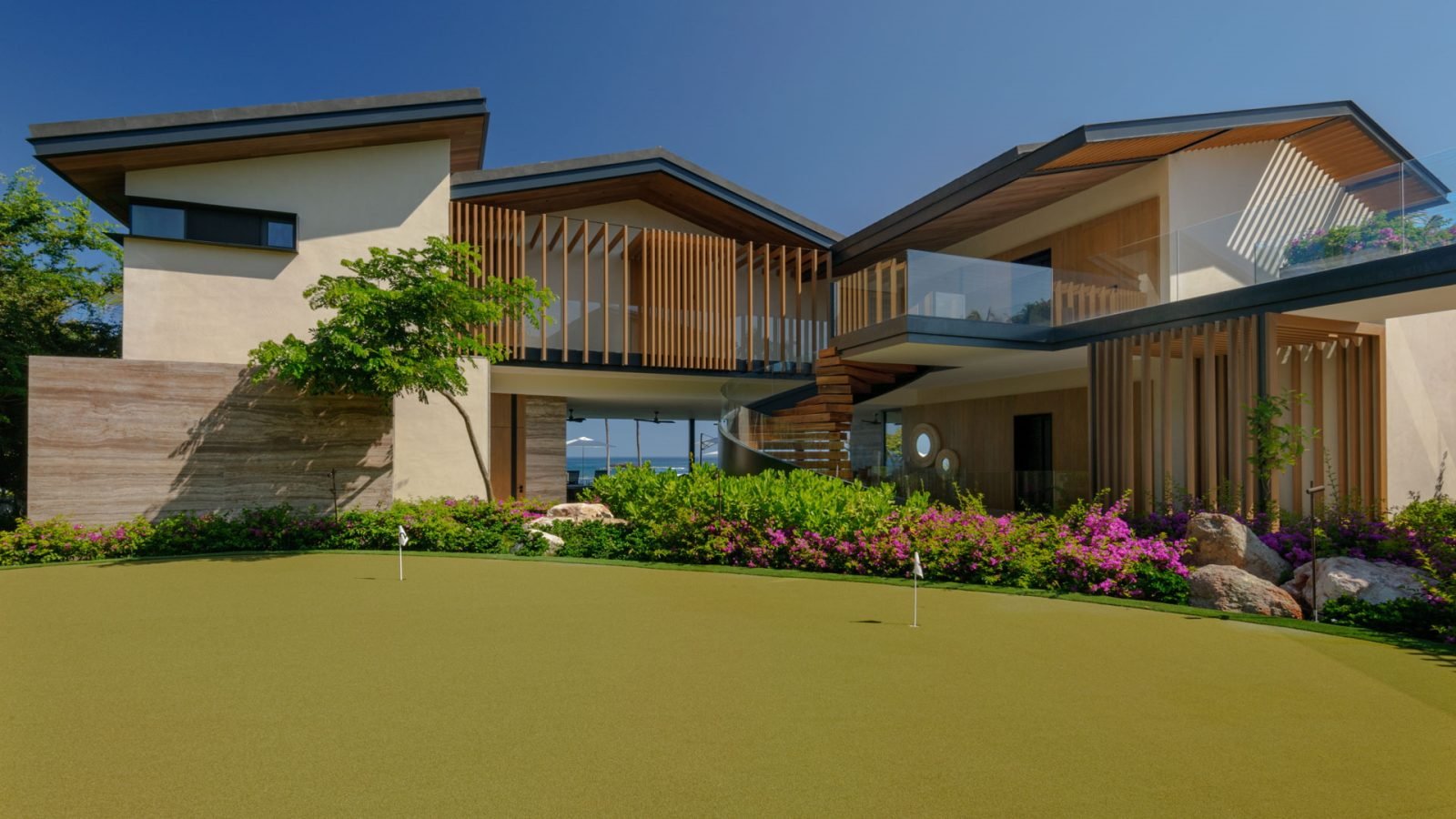
The image that gets delivered does not come out of the camera that way, and not because anything is invented: what is corrected is what the camera cannot resolve in a single exposure. The typical work includes final perspective and distortion correction, blending several exposures so both the interior and the view through the window read, neutralising colour casts — warm fittings sitting next to daylight — cleaning up minor elements, and adjusting contrast and density.
What we do not do without telling you: remove buildings, swap in skies that were never there, or alter proportions. If a project needs a sky replacement, it is agreed beforehand; for editorial and competition use it is better avoided entirely.
The technique that actually shows
Corrected perspective
This is the signature of the craft. When the camera tilts up to take in a building, the verticals converge and the building appears to fall backwards. It is solved with tilt-shift optics — which shift the frame without tilting the camera — or with controlled correction in processing, at the cost of cropping into the image. Which is why the frame is composed with that margin in mind.
Optics: the misused wide angle
The commonest mistake in photographing spaces is reaching for the most extreme wide angle available so the room “looks big”. The result distorts the furniture at the edges, exaggerates distances and produces an image that does not match the real experience of the space — something that, in a property sale, also breeds distrust the moment the buyer walks in. Professional discipline runs the other way: use the longest focal length that still tells the space.
How many images a project needs
A house is told well with 20 to 30 final images; a project aimed at a portfolio and publication asks for between 25 and 35; a development or corporate building may need more than 40 if it includes common areas and aerials. More is not always better: a portfolio of 25 impeccable images convinces more than one of 80 where 50 are surplus.
When the drone adds something, and when it does not
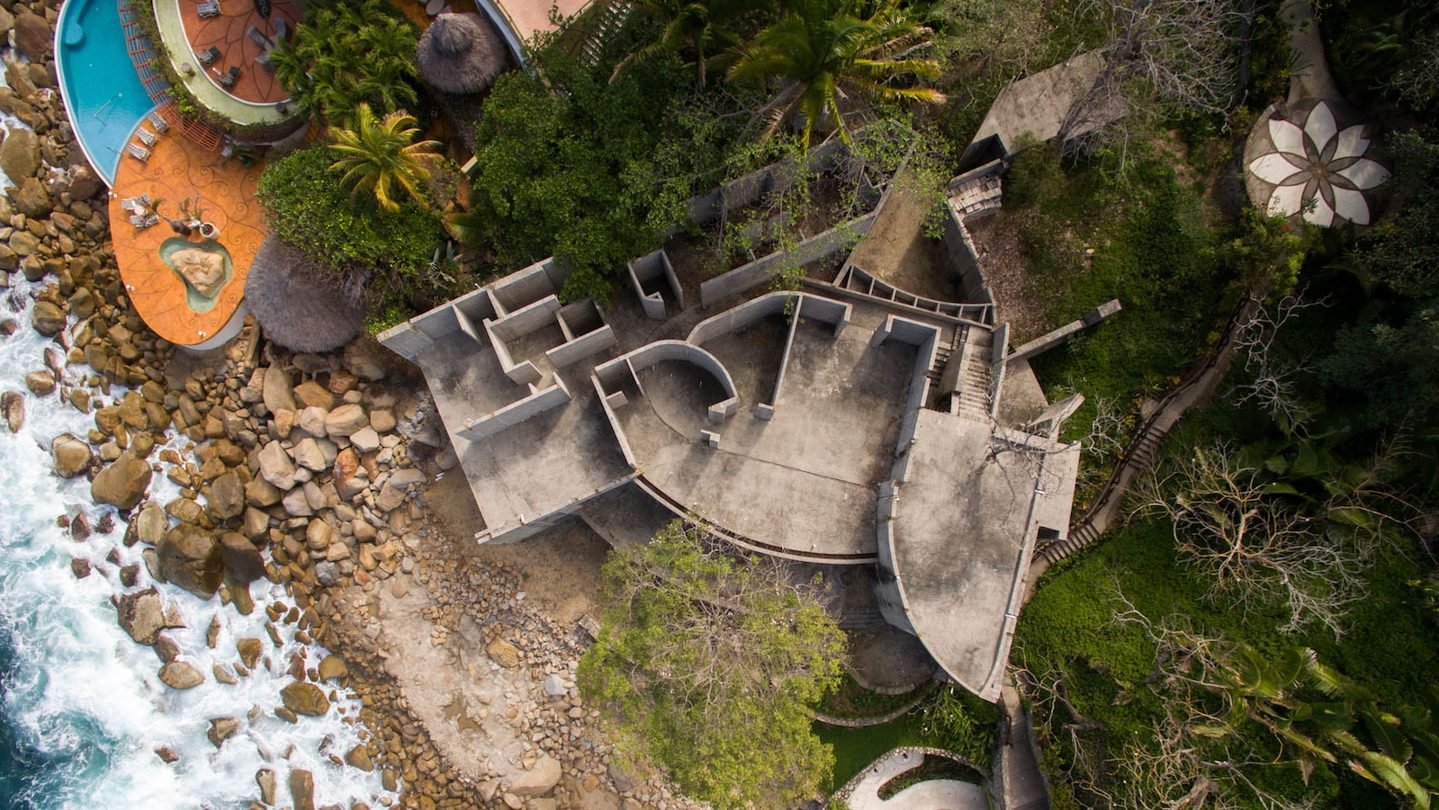
Aerial drone photography is indispensable when the argument of the project is its siting: the relationship with the topography, the sea, the urban grid, or the amenities of a development. It is dispensable when the value lies in the interior and the detail. In Mexico flying is regulated by the federal aviation authority and there are restricted zones — around airports, which includes a good part of Vallarta’s hotel zone and of the Guadalajara metropolitan area — so it is worth confirming that the flight is viable before promising the client aerial shots.
Copyright and usage licences in Mexico
This is the point that generates the most misunderstanding, and it is worth grasping even if you are not a photographer, because it defines what you can do with the images you paid for.
In Mexico a photograph is a work protected by the Federal Copyright Law. Two distinct layers follow from that:
- Moral rights. They belong to the author, they are personal and cannot be waived. In practice they mean the photographer is recognised as the author and credited when the image is published. They are not for sale.
- Economic rights, or the usage licence. This is what is actually negotiated: what for, where, for how long and at what reach you may use the images. Using them in your portfolio and on social media is not the same as using them in a paid advertising campaign, on a billboard, or handing them on to a third party.
That is why the session and the licence appear separately in our price list: the fee covers the creative rate — planning, production and post-production — and the licence is adjusted to the final destination of the material. A firm that will only publish on its own site, social channels and in the press needs a very different licence from a developer running a sales campaign for two years.
Two practical recommendations: agree in writing who may publish what — a project commonly involves architect, interior designer, builder and owner, and all of them want the photos — and make it clear in the contract whether the images may be passed on to suppliers and media, with credit.
What it costs in 2026
We publish our rates so you can budget without guessing. The figures correspond to the creative fee; extended usage licences and extras are added case by case.
Architectural photography: reference fees
The session is quoted by production hours and final images delivered. Add-on services — drone, video, licences — are added to the base fee.
Architectural photography
Quoted by shoot hours and number of final images delivered, with perspective correction and post-processing included.
| Type of project | Fee (MXN) |
|---|---|
| Home / basic session (5 h, 20–25 images) | $10,000 |
| Portfolio / publication (8 h, 30 images) | $16,000 |
| Premium residence / full project (10 h, 40 images) | $23,500 |
| Corporate building / real estate development | From $18,000 |
| Institutional project | From $22,000 |
Add-on services
These apply to every category and are added on top of the session fee.
| Service | Fee (MXN) |
|---|---|
| Aerial drone photography | From $2,500 |
| Styling / props | On request, quoted separately |
| Companion video (reel / walkthrough) | From $17,500 |
| Usage licence — print advertising and campaigns | $26,000 |
| Unlimited / extended commercial licence | $52,500 |
- Fees cover the creative rate (shoot + editing). The usage licence is agreed separately, based on where the images will finally be published.
- There may be an adjustment within each range depending on the size of the client, the logistics involved (travel, number of sessions) and whether the project targets the domestic or the international market.
If your project is a house, a basic session covers portfolio and social. If you are submitting to media or awards, the publication package is the better fit, because those submissions are more demanding in quantity and resolution. The full price list, with all five categories, is on the 2026 pricing page.
How to choose an architectural photographer
Eight questions that quickly separate a specialist from someone who shoots everything:
- Can I see a complete project rather than isolated photos? A greatest-hits portfolio hides inconsistency. A whole project shows whether they can cover an entire building.
- Do they work on a tripod and correct perspective? If the answer is that “the phone fixes it”, this is not architectural photography.
- How do they plan the light? They should talk about hours and orientation without hesitating.
- How many final images do they deliver, and in what formats? High-quality JPGs for web and social, and larger files if there will be print or press.
- What does post-production include? Be clear about which clean-up is included and what is charged separately.
- What usage licence do they grant? See the previous section; it is the part that avoids the most grief.
- What happens if the weather ruins the day? There should be an agreed rescheduling policy, especially on the coast and in the rainy season.
- What is the delivery time? One or two weeks is reasonable; a month without explanation is not.
Where we work
We operate from two bases, with national coverage:
- Puerto Vallarta and Banderas Bay. Luxury residential, hospitality, condominiums and oceanfront developments. See photography and video in Puerto Vallarta.
- Guadalajara and its metropolitan area. Vertical housing, corporate, retail and interiors. See Foto de Arquitectura in Guadalajara.
- Tepic, Riviera Nayarit and surroundings. Nuevo Nayarit, Bucerías, La Cruz, Punta Mita, Sayulita and San Pancho: villas, boutique hotels and pre-sale developments. Within Banderas Bay we charge no travel.
- The Bajío. Querétaro, León, Guanajuato, Celaya, Irapuato and San Miguel de Allende, on a scheduled basis.
For projects outside these areas we cover the whole country; travel is quoted separately and confirmed before booking.
Architectural photography city by city
We work out of Puerto Vallarta and Guadalajara, with standing coverage across the Bajío region. Open your city’s page to see how we adapt architectural photography to your project:
- Architectural photography in Puerto Vallarta
- Architectural photography in Guadalajara
- Architectural photography in Querétaro
- Architectural photography in Aguascalientes
- Architectural photography in León
- Architectural photography in Guanajuato
- Architectural photography in Celaya
- Architectural photography in Irapuato
- Architectural photography in San Miguel de Allende
Is your project somewhere else? We cover the whole country, with travel quoted separately: tell us where it is.
Frequently asked questions about architectural photography
How much does architectural photography cost in Mexico?
In 2026 our architecture sessions start at $10,000 for a house with 20 to 25 final images, and rise with production hours, number of images and the complexity of the project. The prices are the creative fee; drone, video and extended licences are quoted separately. The whole price list is on 2026 pricing.
How long does a session take, and how soon do you deliver?
A house is usually resolved in a single day of five to eight hours; a large project or a hotel can take two or three days. Delivery is normally one to two weeks after the shoot, depending on the number of images and the post-production agreed.
Who owns the photos — the photographer or the client?
Authorship always stays with the photographer — moral rights are not transferable in Mexico — and what the client acquires is a usage licence with a defined reach: portfolio and social, editorial, advertising or extended commercial use. It is worth putting in writing before the shoot to avoid misunderstandings when the material is shared with suppliers or media.
Do I need to prepare the space before the session?
Yes, and it makes an enormous difference. The minimum: work finished and clean, no materials or tools in view, glass cleaned, bulbs of the same colour temperature all working, garden trimmed and spaces cleared of personal items. Fine styling we adjust on site.
Are drone shots included?
They are quoted separately, because not every project needs them and not every site permits them. They contribute a great deal when the siting is part of the argument — coast, topography, developments — and flight restrictions have to be checked beforehand, especially near airports such as those in Puerto Vallarta and Guadalajara.
What happens if it rains or the weather does not cooperate?
We reschedule. On the coast and in the rainy season we always set an alternate date when booking; interior work can go ahead regardless under an overcast sky, which in fact favours diffuse light indoors.
Get a quote for your project’s session
Services mentioned in this article
Hotel Photographer
Rooms, amenities and dining that hold up your rate on Booking, Expedia and paid campaigns.
🛋️Interior Photographer
Materials, natural light and styling, so your work reads as well on screen as it does on site.
🔑Airbnb Photographer
The first photograph decides the click. Images ready for Airbnb, Booking.com and VRBO.
🚁Drone Photographer
The site, the amenities and the setting: what no ground-level frame can show.
Xavier Manuel
Architecture, hospitality and interior photographer. He runs Foto de Arquitectura out of Puerto Vallarta and Guadalajara, with productions across Riviera Nayarit, Tepic and the Bajío region.
More from the blog
 Golden-hour photo charter: Puerto Vallarta from a yachtThe town faces west, so at sunset you only see it head-on from the water. Route, timing, gear, camera settings and which boat to charter to photograph the bay.Read the article →
 Fishing charter in Puerto Vallarta: what to do when you visitWhat we tell clients who fly in for a shoot and have a free day: go fishing. What a private charter looks like, inshore vs offshore, seasons, costs and how to photograph the day.Read the article →
 Interior photography: the complete guideHow an interior design project is photographed so it reads in a portfolio and in press exactly as it feels in person: light, styling, framing and what it costs.Read the article →